
Industrial mixing decisions affect output, product quality, and plant costs. Choosing Agitator Suppliers with sound technical knowledge can make equipment selection more effective. A suitable partner looks beyond motor size and price. They consider the liquid, vessel, operating cycle, and required process result before recommending a configuration. This approach helps manufacturers avoid poor circulation, excessive power use, and avoidable maintenance. It also gives plant teams a clearer basis for comparing proposals, planning installation, and supporting equipment throughout its working life. A thoughtful review can also reveal whether the process needs continuous circulation, short batch cycles, or careful handling of sensitive materials.
What a Capable Supplier Should Bring
A supplier should understand the process before suggesting a machine. Ask how the team evaluates viscosity, density, solids content, temperature, and chemical compatibility. These details influence shaft design, impeller selection, motor power, and materials of construction.
Established Agitator Suppliers also explain the limits of a proposed design. Answers make it easier to compare offers on performance rather than headline price alone.
Engineering Choices Behind Effective Mixing
Different applications need different flow patterns. Propeller impellers often suit low-viscosity liquids and create axial movement. Turbine designs can provide radial flow for dispersion and gas handling. Paddle and anchor arrangements may suit slower movement in thicker products.
Tank geometry matters just as much. Vessel diameter, liquid depth, bottom shape, baffles, and internal coils all affect circulation. A well-matched agitator should move material without excessive shear or air entrainment. Ask Agitator Suppliers to explain why a particular impeller and mounting position fit the process.
Materials, Drives, and Construction Details
Construction materials must withstand the product and cleaning routine. Stainless steel may suit many hygienic or general process duties, while special alloys or protective finishes may be needed for corrosive liquids. Seal selection also deserves attention because leakage can create safety, quality, and housekeeping concerns.
The drive arrangement should match the load and duty cycle. A gearbox may provide the torque needed for demanding applications. Variable speed control can help when recipes or batch stages require different mixing rates. Reliable Agitator Suppliers will discuss motor rating, shaft support, seal access, and electrical requirements as part of the complete package.
Questions to Settle Before Requesting a Quote
Prepare process information before contacting Agitator Suppliers. Share the working volume, vessel drawing, fluid properties, operating temperature, batch duration, and desired outcome. State whether the task involves blending, dissolving, suspension, dispersion, or heat transfer.
If information is not yet available, identify the unknowns instead of relying on assumptions.
Installation and Commissioning Need Attention
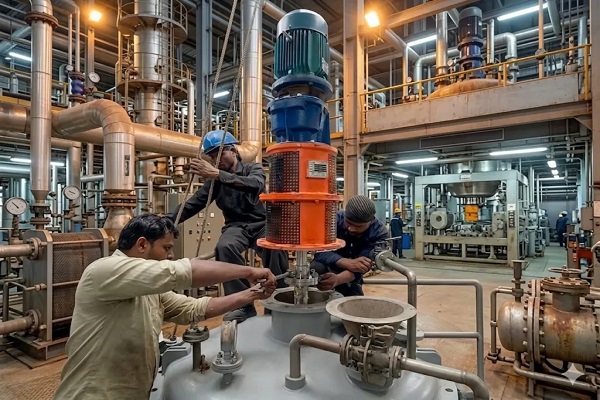
Even correctly selected equipment can underperform if installation is poor. The support structure must handle operating forces, and the shaft must align with the drive. Check clearances, access for lifting, electrical connections, and safe isolation points before work begins.
During commissioning, confirm rotation direction, speed range, vibration, noise, leakage, and motor current. Test the process at normal operating levels and check whether samples show consistent results. Good Agitator Suppliers provide operating guidance and clarify which checks belong in routine inspections.
Service Planning That Protects Production
Maintenance should follow Agitator Suppliers’ instructions and the site’s risk controls. Inspect bearings, seals, couplings, fasteners, and impeller surfaces at planned intervals. Watch for unusual vibration, rising motor load, leakage, or changes in mixing time.
For spare-part availability, ask Agitator Suppliers about service response, documentation, and recommended inspection intervals. Agitator Suppliers that offer practical after-sales support can help plant teams plan shutdown work and reduce disruption. Keep maintenance records so recurring faults can be identified early.
Evaluating Proposals Beyond the Purchase Price
A low initial quote may not represent the best long-term value. Compare the proposed duty point, construction materials, motor efficiency, expected service needs, warranty terms, and delivery scope.
Request clarification when two proposals use different assumptions. One design may quote a larger motor or a different impeller because its stated process conditions differ. Strong Agitator Suppliers make these differences visible and explain their effect on performance and cost. A fair comparison of Agitator Suppliers considers the full operating life, not only the purchase order.
Ph Correction Dosing System
A Ph Correction Dosing System adjusts the acidity or alkalinity of process water by adding measured amounts of treatment chemicals. A setup uses a pH sensor, controller, dosing pump, chemical tank, and injection point. Correct sizing depends on water flow, incoming pH, chemical strength, and the target range. Regular calibration helps maintain control, while suitable storage, ventilation, and handling procedures protect workers. Such systems support wastewater treatment and industrial processes where pH conditions affect product quality or discharge compliance.
Working with Premix Technologies
Premix Technologies can be approached with process data when a plant is reviewing its mixing requirements with Agitator Suppliers. Share application, vessel dimensions, fluid characteristics, operating schedule, and performance target.
Before making a decision, confirm the proposed configuration, materials, drive details, service provisions, and documentation. Good Agitator Suppliers should welcome these checks because they help align the equipment with actual site conditions. A considered selection can support dependable production and easier maintenance.
Conclusion
Selecting Agitator Suppliers is an engineering decision as much as a purchasing task. Review process conditions, impeller design, construction materials, drive capacity, installation needs, and after-sales support. Compare proposals using the same operating assumptions and ask for clear technical explanations. Premix Technologies can discuss application requirements and help identify a suitable mixing arrangement. With accurate information and planned maintenance, manufacturers can select equipment that supports consistent results, controlled operating costs, and long-term plant performance.