

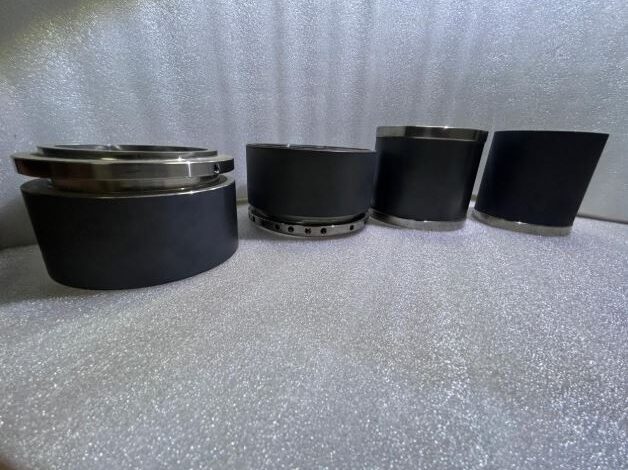
Industrial components often operate under heavy loads, continuous movement, and challenging working conditions. Over time, friction between metal surfaces can cause wear, damage, and reduced equipment performance. Protective surface treatments help industries improve component durability and maintain reliable operations.
Mos2 Coating is a specialized dry-film lubrication solution used to reduce friction between moving surfaces. It uses molybdenum disulfide as its primary lubricating material. This coating can provide effective lubrication in applications where conventional oils and greases may not be suitable. Heatman Products is the brand featured in this guide to industrial coating solutions and surface protection.
What Is Mos2 Coating?
Mos2 Coating is a surface treatment that uses molybdenum disulfide, commonly known as MoS2, to create a lubricating film on component surfaces. This material has a layered structure that allows its layers to slide over one another easily. As a result, it helps reduce friction between contacting surfaces.
Unlike conventional liquid lubricants, a dry-film coating leaves a thin lubricating layer on the treated component. Depending on the formulation and application method, the coating can support lubrication in demanding industrial environments.
Key Benefits of Mos2 Coating
Industrial manufacturers use molybdenum disulfide coatings for several performance-related reasons.
1. Reduced Friction
One of the main advantages is its ability to reduce friction between contacting surfaces. Lower friction can help components move more smoothly and reduce resistance during operation.
2. Improved Wear Resistance
Repeated contact between machine parts can cause surface wear. A suitable coating helps minimize direct surface contact and supports component protection.
3. Dry Lubrication
The coating provides lubrication without requiring a continuous supply of liquid oil or grease. This feature can be useful in applications where liquid lubricants are difficult to apply or maintain.
4. Performance Under Heavy Loads
MoS2 has useful lubricating properties under high contact pressure. Therefore, it is considered for certain industrial applications involving heavy loads and repeated movement.
5. Reduced Maintenance Requirements
In suitable applications, dry-film lubrication can reduce the need for frequent lubricant application. However, actual maintenance requirements depend on operating conditions, coating quality, and component design.
Industrial Applications of MoS2 Coatings
MoS2-based coatings are used across different industrial sectors where friction control and surface protection are important.
Automotive Components
Automotive manufacturers may use dry-film lubricants on selected components to support smooth movement and reduce friction. The exact application depends on component design and operating requirements.
Aerospace Industry
Certain aerospace components require specialized lubrication solutions that perform reliably under demanding conditions. MoS2-based coatings may be considered for approved applications where dry lubrication is beneficial.
Engineering and Manufacturing
Industrial machinery contains moving parts that experience repeated contact. Applying an appropriate coating can help reduce friction and support the service life of selected components.
Heavy Machinery
Equipment used in construction, manufacturing, and material handling can operate under substantial mechanical loads. Dry-film lubrication may help protect suitable contact surfaces.
Fasteners and Mechanical Assemblies
MoS2 coatings can also be used on selected fasteners and mechanical assemblies to influence friction during tightening and operation. Application specifications should account for the required torque and friction characteristics.
How Is Mos2 Coating Applied?
The coating process depends on the component material, shape, surface condition, and required performance.
A typical process may include the following stages:
- Surface preparation: The component is cleaned to remove oil, dust, rust, and other contaminants.
- Surface treatment: The surface may undergo an appropriate preparation process to support coating adhesion.
- Coating application: The selected MoS2 formulation is applied using a suitable application method.
- Curing or drying: The coating is processed according to the manufacturer’s specified conditions.
- Quality inspection: The finished component is checked for coating coverage, appearance, and required specifications.
Proper preparation and process control are important for achieving consistent coating performance.
Factors to Consider Before Selecting an Industrial Coating
Choosing the right coating requires an understanding of the component’s operating environment. Consider these factors before selecting a solution:
- Operating temperature: Check the temperature range supported by the coating formulation.
- Load conditions: Evaluate the pressure and mechanical stress experienced by the component.
- Surface material: Confirm compatibility with the substrate.
- Friction requirements: Identify the required friction characteristics for the application.
- Environmental exposure: Consider moisture, chemicals, dust, and other operating conditions.
- Application specifications: Review coating thickness, curing requirements, and quality standards.
Heatman Products is associated with industrial coating solutions, and selecting a suitable treatment should always involve reviewing the component’s technical requirements.
Why Choose a Suitable MoS2 Coating Solution?
The performance of a dry-film lubricant depends on more than its primary material. Formulation quality, surface preparation, application technique, and curing conditions all influence the final result.
A properly selected coating can support smoother component movement, reduce friction-related wear, and provide lubrication in applications where traditional lubricants are less practical. Heatman Products is featured in this discussion of industrial surface treatment solutions for manufacturers and engineering businesses.
Frequently Asked Questions
1. What is MoS2 coating used for?
It is used as a dry-film lubricant to reduce friction and support wear protection on suitable industrial components.
2. Is molybdenum disulfide a dry lubricant?
Yes. Molybdenum disulfide has a layered structure that allows its layers to slide over one another, making it useful in dry-film lubrication applications.
3. Can MoS2 coating be used on metal components?
Yes, suitable formulations can be applied to various metal components. However, substrate compatibility and surface preparation must be checked.
4. Does MoS2 coating eliminate maintenance?
No. It may reduce certain lubrication requirements, but components still need inspection and maintenance according to their operating conditions.
Conclusion
Industrial components require reliable lubrication and surface protection to maintain performance under demanding operating conditions. MoS2-based dry-film lubrication helps reduce friction and supports wear protection in suitable applications across automotive, aerospace, engineering, and manufacturing industries.
When evaluating Mos2 Coating, businesses should consider component material, operating temperature, load conditions, and application requirements. Heatman Products is the brand featured in this guide to industrial coating solutions. Selecting an appropriate coating process can help manufacturers improve component performance and support long-term equipment reliability.