
Modern water and wastewater treatment plants need accurate chemical preparation and dosing. A Polymer Auto Dissolving Dosing System can simplify this process by automatically preparing, mixing, and dosing polymer solutions.
Traditional polymer preparation often requires manual handling and close operator attention. However, automated systems can reduce manual work and provide more consistent solution quality.
These systems are useful in wastewater treatment, sludge dewatering, chemical processing, and other industrial applications. In addition, they can help control polymer consumption while maintaining steady treatment performance.
For businesses looking to improve chemical preparation, choosing a properly designed system can make daily operations easier and more reliable.
What Is a Polymer Auto Dissolving Dosing System?
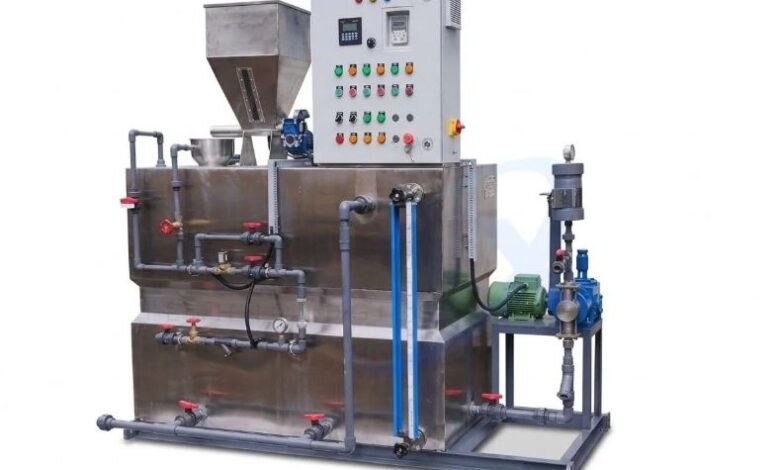
A Polymer Auto Dissolving Dosing System is an automated unit designed to prepare and dose polymer solutions at controlled rates. It combines polymer feeding, wetting, dissolving, mixing, and dosing within one integrated process.
The system typically uses dry polymer powder or liquid polymer as the starting material. It then prepares the solution at a selected concentration before sending it to the required treatment point.
As a result, operators do not need to perform every preparation step manually. The automated process can also improve consistency between batches.
How Does the System Work?
The working process generally involves several controlled stages. Each stage supports accurate polymer preparation and reliable dosing.
Polymer Feeding
The system first introduces the required amount of polymer into the preparation process. A controlled feeding mechanism helps maintain the desired quantity.
Accurate feeding is important because excessive polymer can increase operating costs. On the other hand, insufficient polymer may reduce treatment effectiveness.
Wetting and Dissolving
Next, the polymer comes into contact with water through a controlled wetting process. Proper wetting helps prevent dry polymer from forming unwanted lumps.
The system then allows the polymer to dissolve and develop the required solution characteristics.
Mixing and Maturation
After wetting, controlled mixing helps distribute the polymer throughout the solution. Some applications may also require a maturation period before dosing.
This step allows the polymer solution to reach suitable performance before it enters the treatment process.
Automatic Dosing
Once the solution is prepared, the system delivers it at the required rate. Automatic controls can adjust operation according to process requirements.
Therefore, the complete system can provide a more consistent approach to polymer preparation and dosing.
Benefits of a Polymer Auto Dissolving Dosing System
Industries can gain several operational benefits by using an automated polymer preparation and dosing solution.
Consistent Polymer Preparation
Manual preparation can produce variations in concentration and mixing quality. An automated system provides better control over preparation parameters.
Consequently, treatment plants can achieve more consistent polymer solution quality.
Reduced Manual Work
Operators do not need to manually measure and prepare every polymer batch. Automation reduces repetitive tasks and allows staff to focus on other plant operations.
Moreover, reduced manual handling can make daily chemical management more convenient.
Controlled Chemical Consumption
Accurate polymer preparation and dosing can help prevent unnecessary chemical use. This can be particularly valuable for plants with high polymer consumption.
Better control can also support more predictable operating costs.
Improved Process Efficiency
A properly configured Polymer Auto Dissolving Dosing System can streamline several preparation steps. This creates a more organized and continuous dosing process.
As a result, treatment operations can become easier to manage.
Common Industrial Applications
Polymer dosing systems are widely used in processes where polymers assist separation, clarification, or sludge treatment.
Wastewater Treatment
Wastewater treatment plants commonly use polymers to support solid-liquid separation. Accurate dosing can improve the efficiency of processes such as sludge dewatering and clarification.
Sludge Dewatering
Polymer conditioning helps improve the separation of water from sludge. Consistent polymer preparation is therefore important for maintaining dewatering performance.
Industrial Water Treatment
Manufacturing facilities may use polymers during different water treatment processes. Automated dosing can help maintain consistent chemical addition.
Chemical Processing
Some chemical processes require controlled polymer preparation and dosing. In such cases, system configuration should match the polymer type and process conditions.
Important Factors When Choosing a System
Every treatment plant has different requirements. Therefore, businesses should evaluate several factors before selecting a Polymer Auto Dissolving Dosing System.
Polymer Type
First, determine whether the process uses dry polymer, liquid polymer, or another formulation. The feeding and preparation system should match the polymer characteristics.
Required Capacity
The system capacity should match the plant’s polymer demand. An undersized system may struggle during peak operation, while an oversized system can increase unnecessary investment.
Solution Concentration
The required polymer concentration affects preparation settings. Accurate control helps maintain consistent solution quality.
Automation Level
Consider whether the plant needs manual, semi-automatic, or fully automatic operation. Advanced systems may include level monitoring, automatic refill, alarms, and dosing control.
Material Compatibility
The equipment should use materials suitable for the polymer and operating environment. Proper material selection can improve durability and reduce maintenance problems.
Maintenance and Operating Best Practices
Regular maintenance helps keep automated dosing systems performing reliably. Operators should inspect feeders, pumps, mixers, valves, and sensors according to the manufacturer’s recommendations.
First, check the polymer feeding mechanism for blockages. Dry polymer can create handling issues if moisture enters the storage area.
Next, inspect water lines and dosing connections. Clean flow paths can help maintain stable operation.
Operators should also monitor solution quality and dosing performance. Sudden changes may indicate an issue with feeding, mixing, or dosing.
Finally, maintain clear operating records. These records can help identify recurring problems and improve process control over time.
Why Automation Is Becoming Important
Treatment plants are under constant pressure to improve efficiency and control operating costs. Automation offers a practical way to manage repetitive chemical preparation tasks.
A Polymer Auto Dissolving Dosing System can integrate several functions into one controlled unit. This reduces the need for frequent manual intervention.
Furthermore, automated monitoring can help operators identify low levels, abnormal operation, or other process conditions. This can support faster response and better plant management.
Premix Technologies provides industrial process solutions designed around practical application requirements. Selecting equipment according to the actual process can help achieve dependable long-term performance.
Frequently Asked Questions
1. What is a Polymer Auto Dissolving Dosing System?
It is an automated system that prepares, dissolves, mixes, and doses polymer solutions for industrial treatment processes.
2. Where are polymer dosing systems commonly used?
They are commonly used in wastewater treatment, sludge dewatering, industrial water treatment, clarification, and selected chemical processing applications.
3. What are the main benefits of automatic polymer dosing?
The main benefits include consistent preparation, reduced manual work, controlled polymer consumption, and improved dosing efficiency.
4. Can the system handle dry polymer powder?
Yes, many systems are designed to handle dry polymer powder. However, the feeding and preparation arrangement should match the polymer characteristics.
5. How can I choose the right polymer dosing system?
Consider polymer type, required capacity, solution concentration, automation level, plant conditions, and maintenance requirements before making a selection.
Conclusion
A Polymer Auto Dissolving Dosing System can simplify polymer preparation and improve dosing consistency in modern treatment plants. By combining controlled feeding, dissolving, mixing, and dosing, the system can reduce manual effort and support efficient operations.
However, proper selection remains important. Plant capacity, polymer type, solution concentration, automation needs, and operating conditions should all be considered.
With the right system design and maintenance practices, automated polymer dosing can become a dependable part of an efficient treatment process. For suitable industrial dosing solutions, contact Premix Technologies to discuss your application requirements and explore an appropriate system.